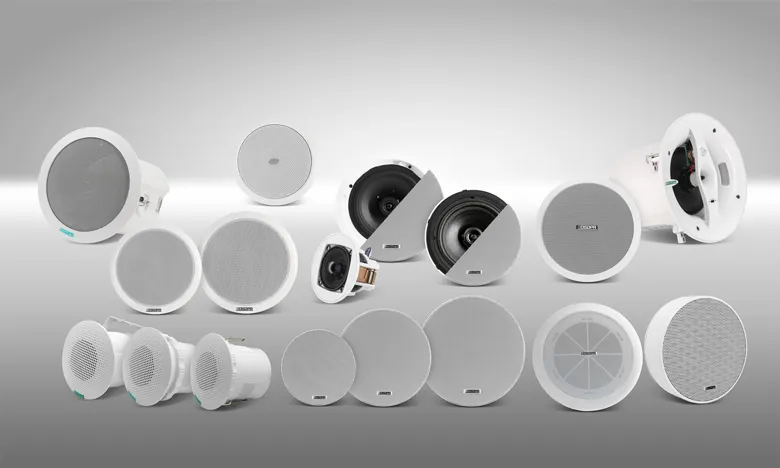

Commercial interiors have changed significantly over the last decade. Offices, hotels, retail spaces, and educational facilities increasingly prioritize clean architectural lines, integrated technology, and a seamless user experience. Audio systems are no longer judged solely by sound quality; how they integrate into the surrounding environment is equally important.
Ceiling speakers are widely used for background music, public announcements, and distributed audio systems. Yet, designers and facility managers face a choice between traditional ceiling speakers and newer frameless alternatives. Understanding the differences can help select a solution that balances aesthetics, functionality, and long-term value.
A frameless ceiling speaker is a ceiling-mounted loudspeaker designed with an ultra-thin or nearly invisible bezel that allows it to blend seamlessly into the surrounding ceiling surface. Unlike conventional models with visible frames, frameless ceiling speakers are engineered to minimize visual impact while maintaining reliable audio performance.
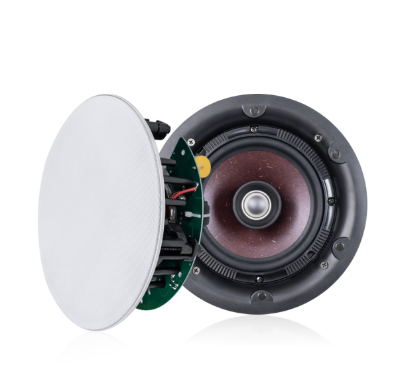
They are increasingly adopted in commercial projects because they deliver consistent sound without compromising interior aesthetics. DSPPA ceiling speaker products, for instance, feature thin-edge aluminum grilles and quick-install spring-clip mounting for flush integration into modern ceilings.
Modern commercial interiors include multiple ceiling-mounted systems such as lighting, HVAC, security devices, and audio equipment. When too many visible elements compete for attention, visual clutter can negatively affect the perception of the space.
Architects and designers often consider ceiling design as an essential component of a building's overall aesthetic. According to the International Facility Management Association (IFMA), workplace design is now a key factor influencing occupant satisfaction and productivity.
Three main reasons ceiling design matters for audio systems:
Minimizes visual distraction from functional equipment.
Supports premium brand image in commercial settings.
Enhances occupant experience by integrating technology unobtrusively.
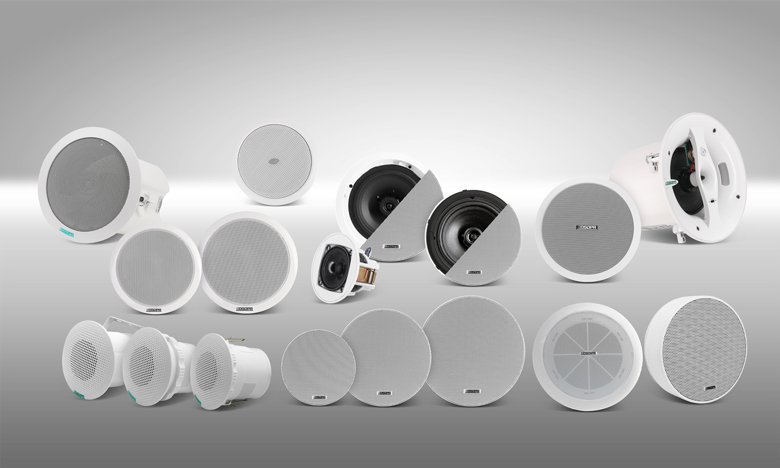
Traditional ceiling speakers have been standard in commercial audio for decades. They feature a visible outer bezel and grille, which are functional but can disrupt modern design aesthetics.
Advantages of traditional speakers:
Familiar installation procedures for contractors.
Broad availability in multiple sizes and power ratings.
Cost-effective for large-scale projects.
Limitations include higher visual impact and less alignment with modern interior trends, particularly in luxury or design-focused environments.
| Feature | Frameless Ceiling Speaker | Traditional Ceiling Speaker |
|---|---|---|
| Visible Bezel | Minimal or Nearly Invisible | Clearly Visible |
| Architectural Integration | Excellent | Moderate |
| Visual Impact | Low | High |
| Suitability for Premium Interiors | High | Medium |
| Installation Method | Spring-Clip or Standard | Standard Mounting |
| Long-Term Aesthetic Value | High | Moderate |
| Common Applications | Hotels, Offices, Retail Stores | Schools, Warehouses, General Commercial Buildings |
Three reasons frameless speakers are preferred in modern projects:
Seamless visual integration into minimalist ceilings.
Compatible with distributed PA systems for uniform sound coverage.
Reduced long-term aesthetic maintenance compared to visible traditional speakers.
Acoustically, performance is determined by driver quality, frequency response, sensitivity, and enclosure design rather than bezel type. Therefore, frameless designs provide aesthetic benefits without compromising audio functionality.
Frameless ceiling speakers excel in environments where both aesthetics and performance are critical:
Hotels: Maintain luxury ambiance while delivering background music and paging.
Retail Stores: Minimize visual distraction to focus on merchandise and branding.
Corporate Offices: Support modern office design and collaborative spaces.
Educational Facilities and Museums: Preserve architectural integrity while ensuring clear announcements.
These environments benefit most from low-profile integration, supporting occupant experience while fulfilling functional audio requirements.
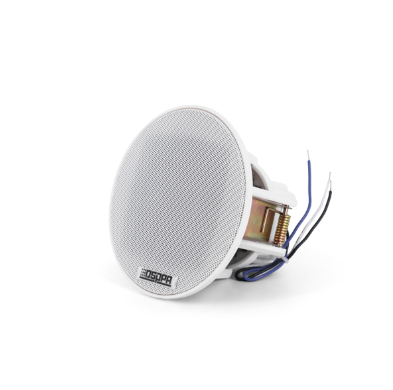
Modern frameless ceiling speakers often use spring-clip or similar mounting systems as traditional speakers, making installation straightforward. Maintenance remains similar to conventional models, with periodic inspection, cleaning, and performance checks required.
When selecting speakers, long-term visual value should be considered. Clean ceiling lines contribute to the perception of quality over time, potentially reducing future renovation needs.
Factors to consider when selecting a ceiling speaker:
Audio coverage and room size
Ceiling construction type
Interior design goals
Function of the space (e.g., office, hotel, retail)
Long-term maintenance expectations
Projects focused primarily on cost may find traditional speakers sufficient. Premium spaces that value architectural aesthetics will likely benefit from frameless ceiling speakers.
While traditional ceiling speakers remain practical and reliable, frameless designs offer a clear advantage in spaces where appearance and architectural integration matter. For hotels, offices, retail stores, and educational facilities, frameless ceiling speakers provide a cleaner, modern ceiling profile while delivering the dependable performance expected from professional installations.
Q1: Are frameless ceiling speakers more expensive than traditional models?
A: They are often slightly higher in upfront cost due to materials and finishing, but long-term visual value can justify the investment.
Q2: Do frameless ceiling speakers improve sound quality?
A: Not inherently. Sound quality depends on the driver, enclosure design, and system setup rather than the bezel style.
Q3: Can frameless ceiling speakers be used in PA systems?
A: Yes. They integrate well into distributed audio networks, serving both background music and public announcement functions.
Q4: Are they suitable for retrofits?
A: Yes. Many frameless models use standard mounting methods compatible with existing ceilings.
Q5: Which industries use frameless speakers most?
A: Hotels, retail stores, corporate offices, luxury residential projects, museums, and educational facilities.
International Facility Management Association (IFMA) – Workplace Design Research: https://www.ifma.org
International Organization for Standardization (ISO) – Acoustic Standards for Public Spaces: https://www.iso.org
Wikipedia – Loudspeaker: https://en.wikipedia.org/wiki/Loudspeaker
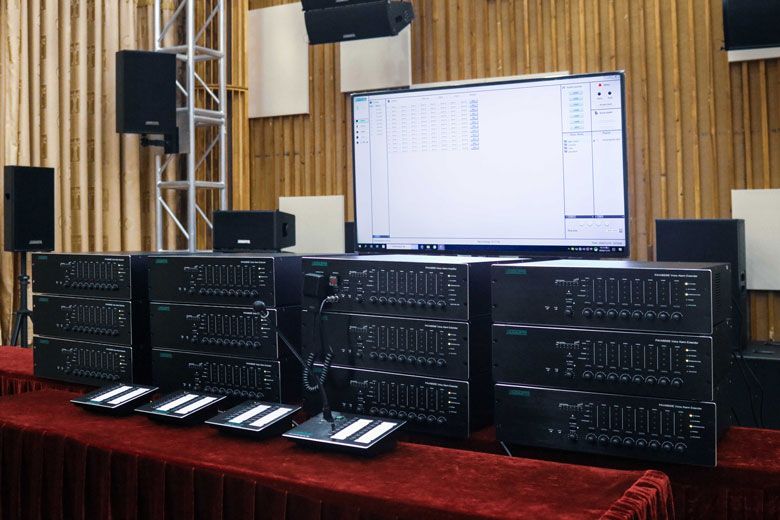 【DSPPA Demo】PAVA8000 EN54 Voice Evacuation SystemNovember 12, 2020Abstract: DSPPA PAVA8000 EN54 Voice Evacuation SystemToday, we are gonna show you a demo about our PAVA8000 EN54 Voice Evacuation System.PAVA8000EN54 Voice Evacuation System can not only support manua...view
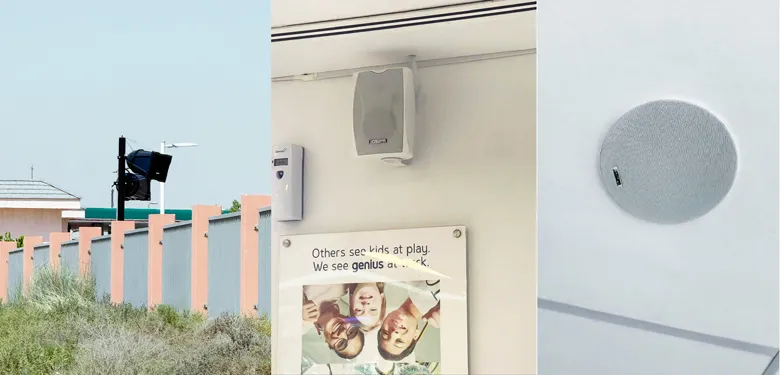 Horn Speakers vs Ceiling Speakers vs Wall-Mount Speakers: 2026 Selection Guide for Indoor, Outdoor & High-Ceiling PA ProjectsMarch 26, 2026IntroductionSelecting the right speakers is one of the most important decisions in any Public Address (PA) system design. In 2026, system integrators and ELV contractors must balance coverage, intelli...view
 EN
EN
 ar
ar
 bn
bn
 fr
fr
 ms
ms
 de
de
 th
th
 id
id
 hi
hi
 pt
pt
 ru
ru
 es
es
