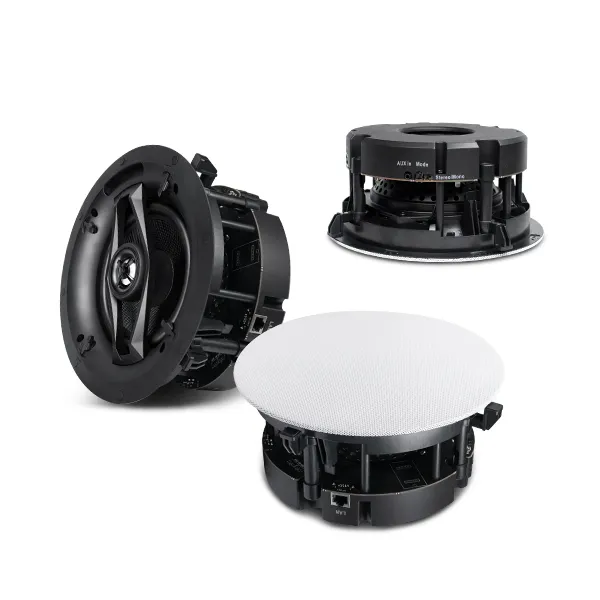

Selecting a ceiling speaker is not only an aesthetic decision but also an acoustic engineering decision. In commercial audio systems, incorrect speaker selection can lead to uneven sound coverage, poor speech intelligibility, and unnecessary installation costs.
Modern projects often involve mixed environments such as indoor offices connected to semi-outdoor corridors or open commercial spaces. This makes proper speaker selection essential for system reliability and long-term performance.
A ceiling speaker is a distributed audio device installed within ceiling structures to deliver controlled sound coverage across defined listening zones.
To achieve consistent performance, engineers must evaluate both environmental conditions and acoustic requirements before choosing a model.
Unlike portable speakers, ceiling-mounted systems rely on distributed sound dispersion rather than high output from a single point. This means placement and coverage design are more important than raw power.
Indoor environments typically allow controlled reflection and absorption, while outdoor spaces introduce challenges such as open-air dispersion and sound leakage.
When planning a system, professionals often prioritize coverage density rather than individual speaker power.
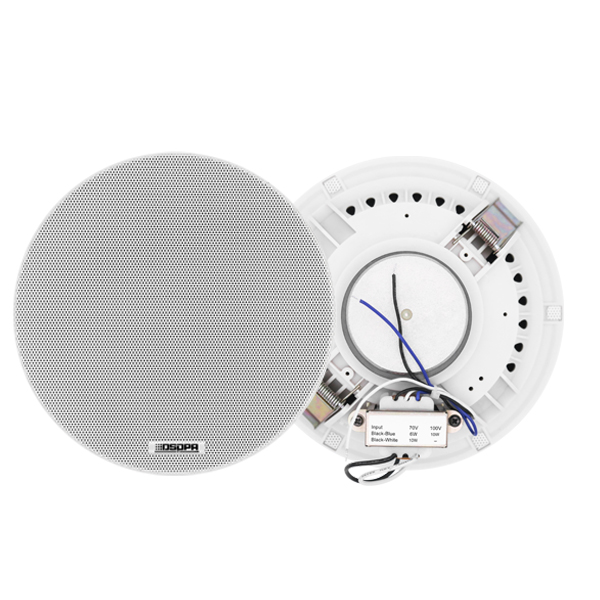
In compact rooms, a 10W ceiling speaker is commonly used because it provides sufficient output without overdriving small acoustic spaces.
Environmental exposure is one of the most overlooked factors in ceiling speaker selection. Indoor and outdoor environments differ significantly in humidity, temperature variation, and dust exposure.
Indoor systems generally operate in stable environments such as offices or meeting rooms, where acoustic consistency is easier to maintain. Outdoor systems, however, require protective design elements such as sealed enclosures and corrosion-resistant materials.
In commercial engineering practice, this distinction directly impacts product lifespan and maintenance cost.
Ceiling speakers are rarely used as standalone devices. They are usually part of a larger public address or background music system. System compatibility is therefore critical.
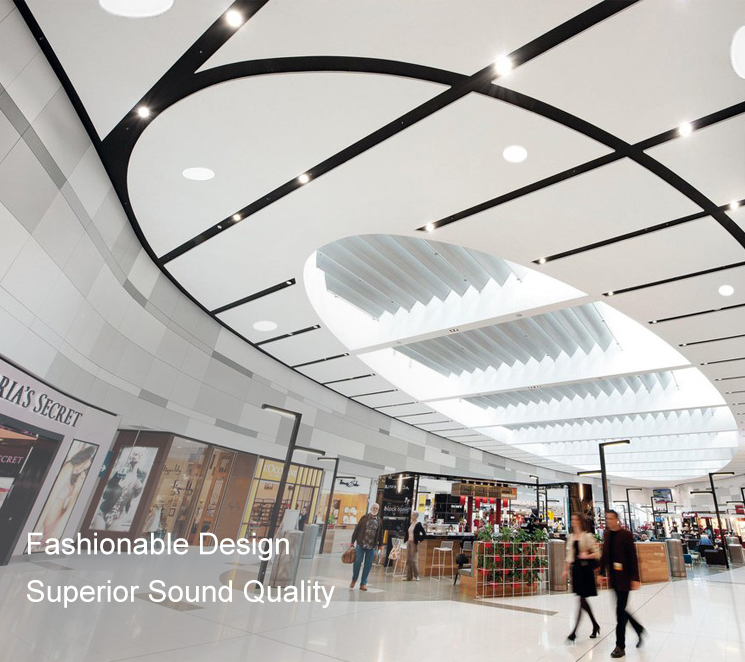
A dsppa ceiling speaker is often deployed in integrated PA systems because it supports distributed audio architecture used in commercial buildings such as airports, shopping malls, and campuses.
Proper system integration ensures consistent volume levels across zones and prevents audio delay or imbalance.
The decision between indoor and outdoor ceiling speakers depends on technical rather than aesthetic criteria. These include protection rating, installation structure, and acoustic dispersion behavior.
| Engineering Factor | Indoor Ceiling Speaker | Outdoor Ceiling Speaker |
|---|---|---|
| Acoustic Control | High (reflective surfaces) | Low (open environment) |
| Environmental Exposure | Minimal | High (rain, UV, humidity) |
| Installation Depth | Standard ceiling cavity | Reinforced sealed housing |
| Signal Consistency | Stable | Affected by wind and space openness |
| Maintenance Frequency | Low | Higher due to exposure |
This comparison shows that system design must adapt to environmental physics rather than visual preferences alone.
Material selection plays a critical role in speaker performance and durability. Indoor speakers often prioritize acoustic transparency and lightweight construction, while outdoor models focus on sealing and corrosion resistance.
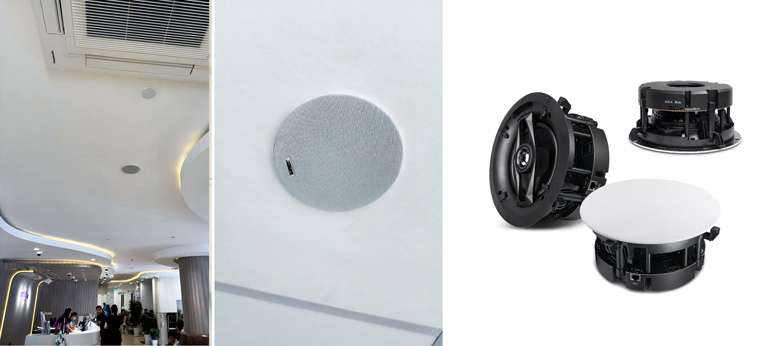
A growing trend in commercial architecture is the use of low-profile systems such as frameless ceiling speaker, which reduces visible hardware and supports minimalist ceiling design strategies.
In contrast, traditional visible-frame designs remain common in utility-focused installations where aesthetics are secondary.
Another widely used option in retrofit projects is flush mount ceiling speakers, which allow integration into existing ceiling structures without major modification.
Audio system designers must also consider power distribution across multiple ceiling speakers. Incorrect load calculation can result in distortion or inefficient amplifier performance.
In distributed systems, matching speaker impedance and wattage is essential to maintaining stable output. For example, multiple 10W units may be used together to achieve uniform coverage across larger areas.
Industry guidelines from audio engineering standards emphasize balanced load distribution to avoid signal degradation in long cable runs .
Instead of choosing speakers based solely on specifications, engineers often follow application-driven selection logic. In general commercial practice, ceiling speaker selection can be categorized into three functional roles:
Background music distribution in retail and hospitality environments
Voice announcement systems in transportation and public buildings
Emergency communication in compliance-driven infrastructures
This classification helps determine whether waterproofing, power rating, or design integration should be prioritized.
Long-term reliability is a major factor in commercial installations. Ceiling speakers are typically expected to operate continuously for years without replacement.
Indoor systems generally require minimal maintenance, while outdoor systems must be inspected periodically due to environmental exposure.
Key maintenance considerations include:
Checking terminal connections for corrosion
Ensuring grille integrity and dust resistance
Verifying consistent audio output across zones
These factors directly affect lifecycle cost and system stability.
Choosing the right ceiling speaker requires balancing acoustic coverage, environmental durability, and system integration requirements. Indoor environments prioritize controlled sound distribution, while outdoor installations demand structural protection and weather resistance. Proper engineering decisions ensure long-term performance and operational efficiency.
Q1: Can the same ceiling speaker be used indoors and outdoors?
No. Indoor speakers lack environmental protection required for outdoor conditions such as humidity and rain exposure.
Q2: What does 10W mean in a ceiling speaker?
It refers to the power rating, indicating the maximum electrical input the speaker can handle under normal operation.
Q3: Are frameless ceiling speakers suitable for commercial systems?
Yes. They are widely used in modern commercial environments where visual integration is important.
Q4: What is the main advantage of distributed ceiling speaker systems?
They provide uniform sound coverage and reduce volume imbalance across large spaces.
Q5: How important is installation depth?
Very important, as insufficient ceiling cavity depth can affect both performance and installation safety.
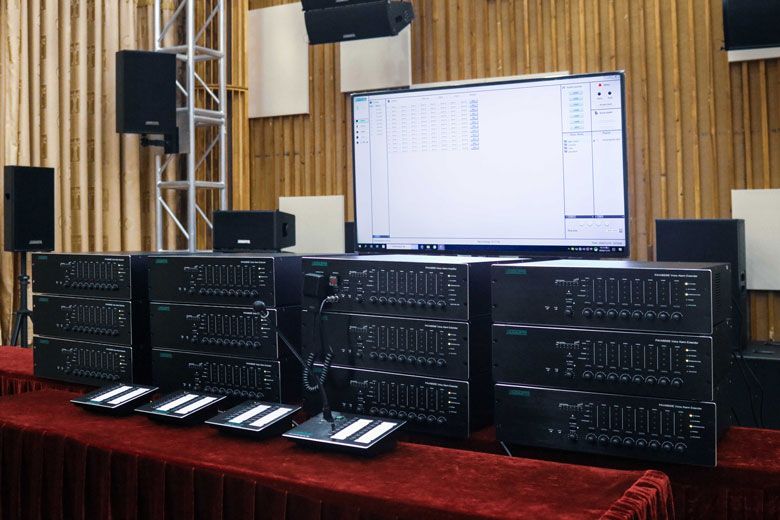 【DSPPA Demo】PAVA8000 EN54 Voice Evacuation SystemNovember 12, 2020Abstract: DSPPA PAVA8000 EN54 Voice Evacuation SystemToday, we are gonna show you a demo about our PAVA8000 EN54 Voice Evacuation System.PAVA8000EN54 Voice Evacuation System can not only support manua...view
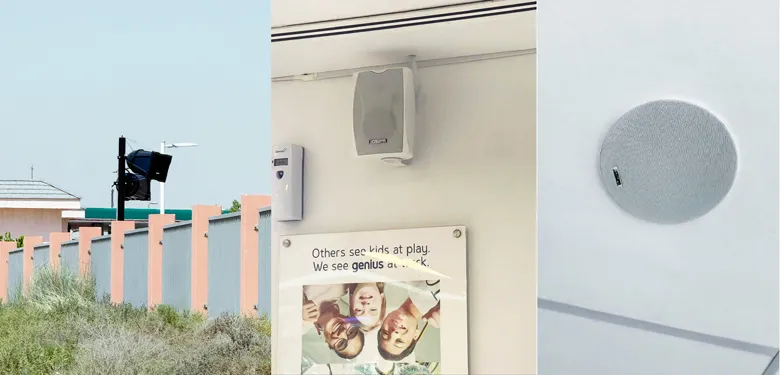 Horn Speakers vs Ceiling Speakers vs Wall-Mount Speakers: 2026 Selection Guide for Indoor, Outdoor & High-Ceiling PA ProjectsMarch 26, 2026IntroductionSelecting the right speakers is one of the most important decisions in any Public Address (PA) system design. In 2026, system integrators and ELV contractors must balance coverage, intelli...view
 EN
EN
 ar
ar
 bn
bn
 fr
fr
 ms
ms
 de
de
 th
th
 id
id
 hi
hi
 pt
pt
 ru
ru
 es
es
